CRANE CHEMPHARMA & ENERGY · DIAPHRAGM VALVES
Saunders Industrial Diaphragm Valves – Weir & Straight Through Designs
Saunders industrial diaphragm valves by Crane for corrosive, abrasive & slurry applications. Weir & KB types. Get quotes from PC Engineering India.
Overview
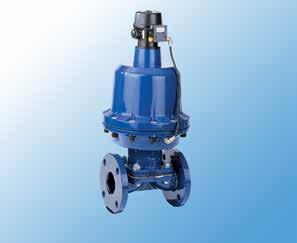
Saunders industrial diaphragm valves, manufactured by Crane ChemPharma & Energy, are engineered for process industries where corrosion resistance, abrasion resistance, and leak-tight operation are critical. Since the invention of the diaphragm valve by P.K. Saunders in 1928, these valves have set the benchmark for handling corrosive chemicals, slurries, and abrasive media across diverse industrial sectors.
The diaphragm valve design isolates all working parts from the line media, ensuring positive closure even with entrained particulates. This makes Saunders valves ideal for both on/off and throttling control applications. The three-part construction allows in-line maintenance and actuator retrofitting without removing the valve body from the pipeline, significantly reducing plant downtime.
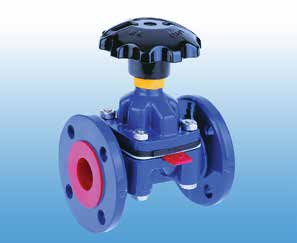
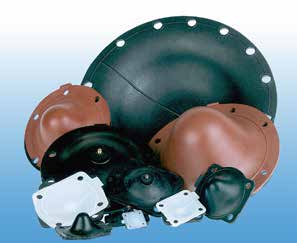
Saunders diaphragm valves are available in multiple configurations—including the versatile "A Type" weir design for corrosive media, KB and K Type straight-through designs for solids handling, and specialized WFB variants for marine and fire applications. All diaphragms are manufactured in-house using advanced polymer compounding technology.
Key Features
- 100% leak-tight shut-off in pressure and vacuum services (per MSS SP-88, BS EN 12266-1)
- Corrosion resistant linings: elastomer and fluoropolymer options eliminate need for exotic alloys
- Abrasion resistant polymer technology; KB type handles up to 100% solids
- Top-entry, three-part design enables in-line maintenance and reduced downtime
- Linear operation eliminates rotational seat wear, extending service life
- Operating mechanism fully isolated from process media
- Suitable for throttling and control with streamlined, cavity-free flow path
- Installation versatility—can be mounted in any position
Specifications
| Parameter | Value / Range |
|---|---|
| Valve Types | A Type (Weir), KB/K Type (Straight Through), WFB, NX Check |
| Size Range | DN8 (¼") to DN250 (10") |
| Diaphragm Materials | PTFE, Modified PTFE, Elastomers (Rubber, XA composite) |
| Body Linings | Glass, Fluorocarbon, Elastomer, Fluoropolymer |
| Solids Handling | Up to 15% (A Type); up to 100% (KB Type) |
| Actuation Options | Manual, Modular Pneumatic, Compact Pneumatic |
| Standards Compliance | MSS SP-88, BS EN 12266-1, Global Standards |
| Special Variants | Fire-tested diaphragm (WFB), Three-layer diaphragm for corrosive gases |
Applications
Saunders industrial diaphragm valves are used across a wide range of process industries, including:
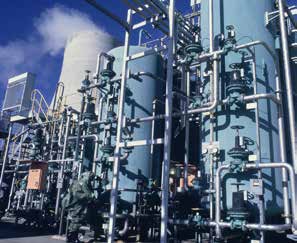
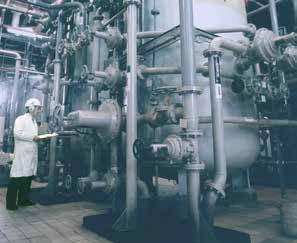
- Chemical & Petrochemical: Handling corrosive acids, alkalis, and solvents - Pharmaceutical & Biotechnology: High-purity fluid control - Water & Wastewater Treatment: Slurry and abrasive media isolation - Pulp & Paper: Abrasive stock and chemical dosing - Mining & Minerals Processing: High-solids slurry lines - Marine & Offshore: Fire mains, tank cleaning, and washdown systems - Power Generation: Utility and cooling water circuits
Product Images
Frequently Asked Questions
Get a Quote
Contact PC Engineering for pricing, availability, and technical support for Saunders Industrial Diaphragm Valves. Call us or fill in our inquiry form — our engineers will respond within 24 hours.
More from Crane ChemPharma & Energy
- XOMOX FE0 Sleeved Plug Valves – Crane – Cavity-Free Design for Chemical Processing
- Crane Centerline Series VIA/RS Butterfly Valves – Industrial Concentric Design
- Crane ChemPharma Bellows Sealed Globe Valves Type 11.3 – Fully Flushed Bellows Design
- Crane Duo-Chek High Performance Non-Slam Check Valves
- Crane FLOWSEAL High-Performance Butterfly Valves - Series HP/ANSI & HP/DIN
- Flowseal High Performance Butterfly Valves – Crane – ASME Class 150/300/600
Related Diaphragm Valves
Brand
Find the losses before you invest in new equipment.
Steam and pump system walkthroughs that identify inefficiencies, energy losses and improvement priorities before any new product is specified.